
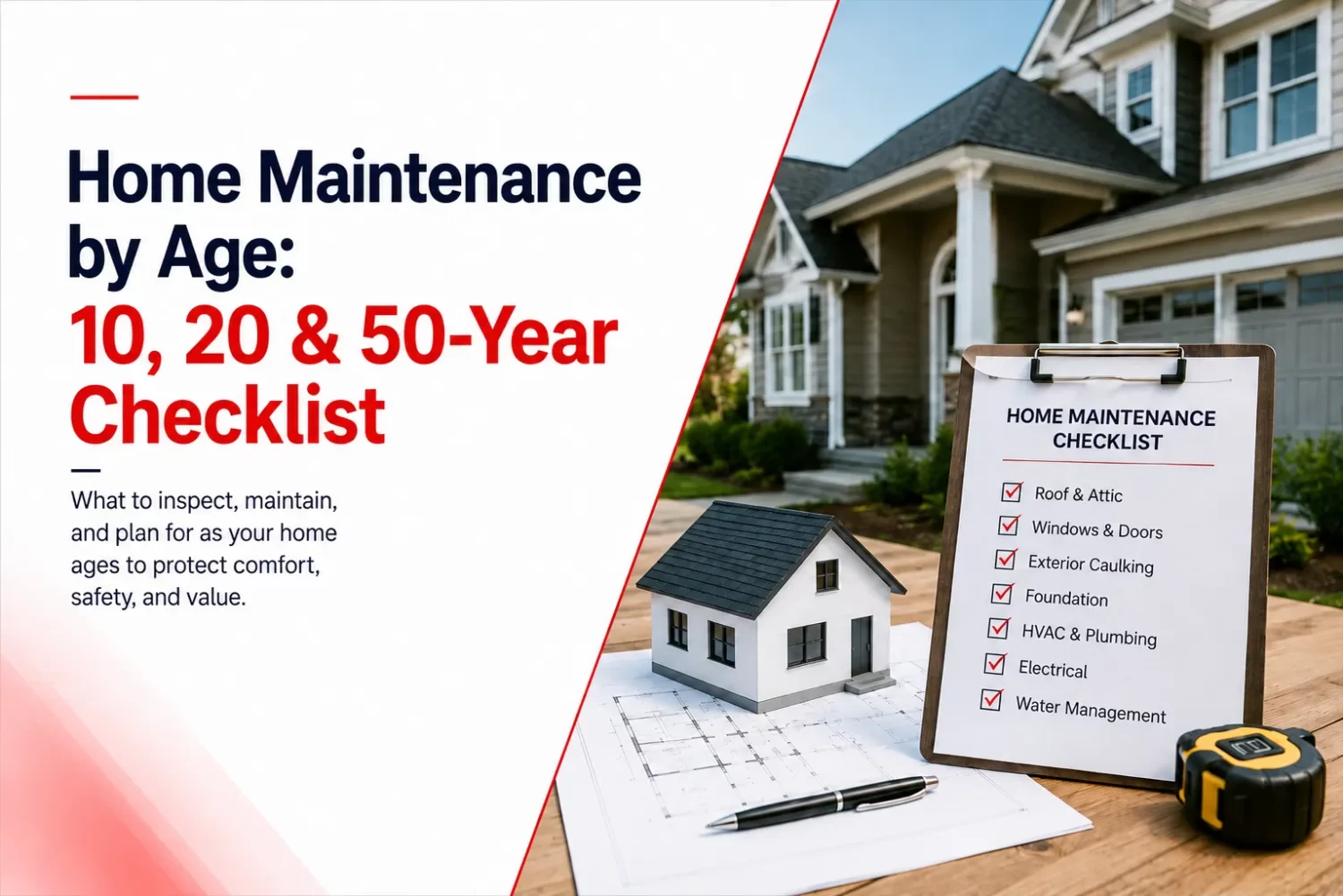
Before buying an older home or deciding what maintenance your current house needs, it helps to understand how different parts of a building age over time. In this episode, the team joins Acadia On Air to discuss home maintenance by age, including what to check around the 10-year, 20-year, and 50-year marks. The conversation covers roofs, attic insulation, caulking, windows, foundation cracks, water heaters, HVAC systems, brick sills, plumbing, electrical, and why water management is one of the most important parts of protecting a home. For homeowners planning interior renovations, this discussion is a practical reminder that smart renovation planning starts with understanding the condition of the house itself.
One of the strongest points in the episode is that houses age in layers. A 10-year-old home may still feel new, but that does not mean everything should be ignored. The roof, exterior caulking, foundation cracks, attic conditions, wooden window frames, and garage door framing can already show early signs of wear. Maintenance is not only about fixing visible damage; it is about checking hidden areas before small moisture issues become expensive repairs.
Helpful Takeaways for Maintaining a Home as It Ages
- Start checking the roof around 10 years. Builder-grade shingles, valleys, attic moisture, and roof installation details should be inspected before leaks become visible inside the home.
- Do not ignore the attic. Moisture, mold, and compressed insulation can reduce performance and may signal problems with roof detailing or ventilation.
- Review exterior caulking and sealant. Window caulking can dry, crack, or separate over time, allowing water and air to enter around openings.
- Check foundation cracks after settling. Small foundation cracks can appear as the house settles, and sealing them early can help prevent moisture problems.
- Look at windows around 15 to 20 years. Fog between glass panes, failed sealed units, poor insulation around frames, and air leaks may indicate it is time for repair or replacement.
- Evaluate water heaters and HVAC systems. Around the 20-year mark, it may be worth reviewing whether older equipment should be upgraded for efficiency, comfort, and long-term use.
- Take water management seriously. Brick sills, vapor barriers, window installation details, roof valleys, and drainage gaps all affect how water enters, exits, or damages a building envelope.
Another important insight is that roof problems do not always show up as ceiling leaks right away. The episode explains that water can enter roof valleys or other weak points and collect in the attic first. From there, moisture can affect insulation, create mold, and slowly impact indoor air quality. That is why an attic inspection can be just as important as looking at the roof from outside.
The conversation also highlights the difference between builder-grade work and carefully detailed construction. A builder may install products that pass minimum requirements, but that does not always mean the detail is built for the longest possible service life. Roof valleys, plywood support, window installation, garage framing, exterior caulking, and insulation all depend on workmanship, not just the visible finish.
For homes around 15 to 20 years old, windows become a major topic. Fog between panes usually means the sealed glass unit has failed. In some cases, the sealed unit can be replaced without replacing the entire window, but it requires the right knowledge, measurements, and installation. If the window is replaced, it is also an opportunity to improve insulation around the opening and reduce drafts that may have been present since the original build.
The episode also explains why older brick sill details can become a moisture problem. Soldier brick sills may allow water to sit between brick joints and eventually loosen sealant around the window. If water reaches behind the opening and the vapor barrier was not properly maintained or replaced during window work, the wood framing can begin to rot without the homeowner seeing the issue right away.
At the 20-year mark, the discussion expands into mechanical systems. Water heaters, HVAC equipment, and energy-efficiency upgrades may not always need replacement simply because of age, but they should be reviewed. If a homeowner plans to stay in the house for another decade, upgrading to more efficient systems may improve comfort and reduce long-term operating costs.
For 50-year-old homes, the team explains that the mindset should shift toward a deeper review. Plumbing, sewers, older electrical, old building code standards, windows, roof systems, insulation, and moisture management should all be considered carefully. That does not mean every old system must be ripped out immediately if it is working, but if the home is being renovated and walls are being opened, it may be the right time to update pipes, wiring, drains, and other hidden systems.
For homeowners, the practical lesson is simple: do not wait for visible damage before checking the house. A roof leak, drafty window, rotten sill, failed sealed unit, cracked foundation, or aging HVAC system usually starts long before it becomes obvious. Regular inspections and smart maintenance help protect the home, reduce surprise costs, and make future renovations much easier to plan.
This blog only scratches the surface of the full conversation. Watch the full podcast above to hear the full discussion on 10-year, 20-year, and 50-year home maintenance, roof inspections, window replacement, attic insulation, water management, HVAC upgrades, foundation cracks, older homes, and what homeowners should watch for as their house ages.