
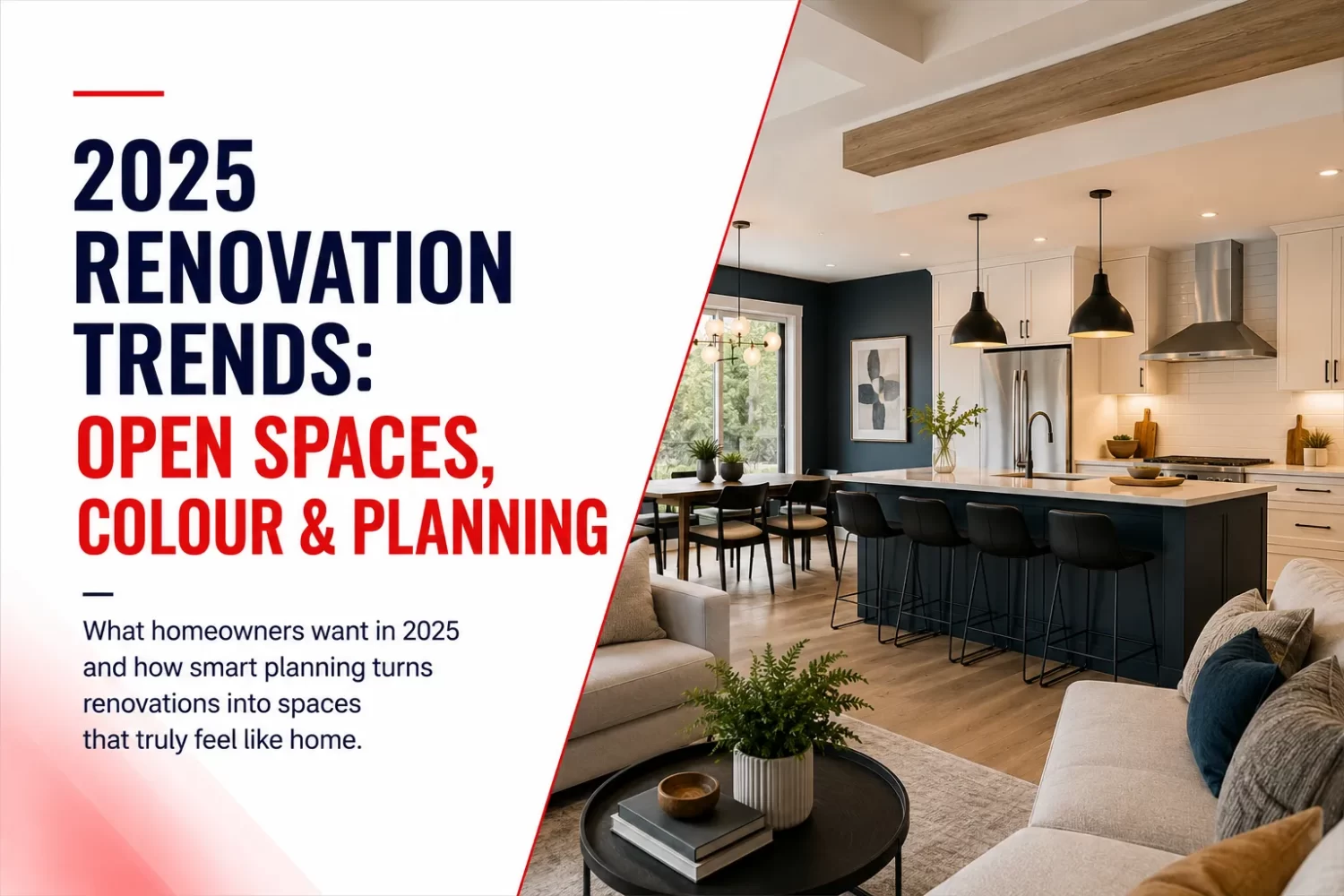
Before planning a major renovation, it helps to understand what homeowners are actually asking for right now and why those priorities are changing. In this episode, the team joins Acadia On Air to discuss 2025 renovation trends, why more people are choosing to stay and renovate instead of moving, the continued demand for open-concept layouts, the return of colour in interior design, the emotional payoff of seeing a finished project, and the difference between residential and commercial construction management. For homeowners planning interior renovations, this conversation offers a useful look at how design choices, lifestyle changes, and proper project coordination all come together.
One of the strongest points in the episode is that many homeowners are now choosing to improve the home they already have instead of rushing to sell and relocate. The discussion points to more demand for interior renovations, additions, and upgrades that make existing homes work better for the people living in them. Renovation is becoming less about chasing a new address and more about adapting the current home to fit a new lifestyle, budget, family need, or long-term plan.
Helpful Takeaways From 2025 Renovation Trends
- More homeowners are renovating instead of moving. Existing homes are being reworked through interior renovations, additions, and layout changes rather than replaced by a new purchase.
- Open concept is still in demand. First-floor renovations often involve removing walls to create larger, more connected living, kitchen, and entertaining spaces.
- Social spaces are getting more attention. Kitchens, dining areas, and main-floor entertaining zones are becoming more important than highly customized private bedrooms.
- Colour is returning. After years of black, white, and sterile neutral palettes, homeowners are starting to bring more colour and mixed tones back into their interiors.
- Finishing details complete the space. A renovation may be well-built, but furniture, artwork, lighting, decor, and personal touches help make it feel like a real home.
- Homeowners still need to stay involved. Unlike TV renovation reveals, real projects require decisions throughout the process, especially when design, layout, and functionality are personal.
- Project management affects the final result. Scheduling, communication, drawings, trade coordination, and infrastructure separate a managed build from a loose collection of trades.
Another important insight is that open-concept living remains a major renovation driver. The episode explains that many first-floor renovations still include wall removal because homeowners want larger, more welcoming spaces. These layouts support cooking, hosting, family time, and the kind of social living that has become more important in modern homes.
The conversation also explores why bedrooms are often becoming simpler while main-floor areas receive more design attention. A bedroom may be bright, minimal, and calm, but kitchens, dining rooms, and living areas are where homeowners entertain, gather, and show the result of the renovation. That shift explains why so much design energy now goes into the spaces guests see first.
Colour is another major topic in the episode. The team notes that homeowners are moving away from overly sterile black-and-white interiors and starting to bring more colour back into the home. This does not mean every room needs to become loud or overwhelming. It means warmer palettes, mixed tones, and more personality are starting to replace the flat, mass-produced look that became common in recent years.
The episode also makes a good point about the difference between a finished renovation and a home that actually feels lived in. Even a beautiful kitchen, dining room, or living room can feel empty without the right layers. Artwork, frames, cushions, flowers, blinds, shutters, decor, and everyday personal items help soften the space and make it feel complete without turning it into clutter.
Another part of the conversation compares real renovations with TV-style renovation reveals. In real life, homeowners cannot simply disappear for months and return to a surprise transformation. There are too many decisions to make, from layout and finishes to accessibility, stairs, elevators, trades, budgets, and problem-solving. A strong renovation process includes the homeowner while still protecting them from unnecessary chaos.
The discussion also moves into why residential construction can be more complicated than it looks. Residential trades are often smaller operators with less office support, while commercial contractors usually have more infrastructure behind them. That is why communication, scheduling, meetings, drawings, and project management matter so much. A well-managed residential renovation requires the contractor to coordinate people who may not naturally operate like a commercial construction team.
For homeowners, the practical lesson is that trends should never be copied blindly. Open layouts, colour, social spaces, minimalist bedrooms, and layered decor can all work beautifully when they serve the way you actually live. The best renovation is not just the one that looks current in 2025; it is the one that improves how your home functions, feels, and supports your daily life.
This blog only scratches the surface of the full conversation. Watch the full podcast above to hear the full discussion on 2025 renovation trends, open-concept living, colourful interiors, social spaces, residential project management, commercial versus residential construction, and what homeowners should think about before renovating their existing home.