
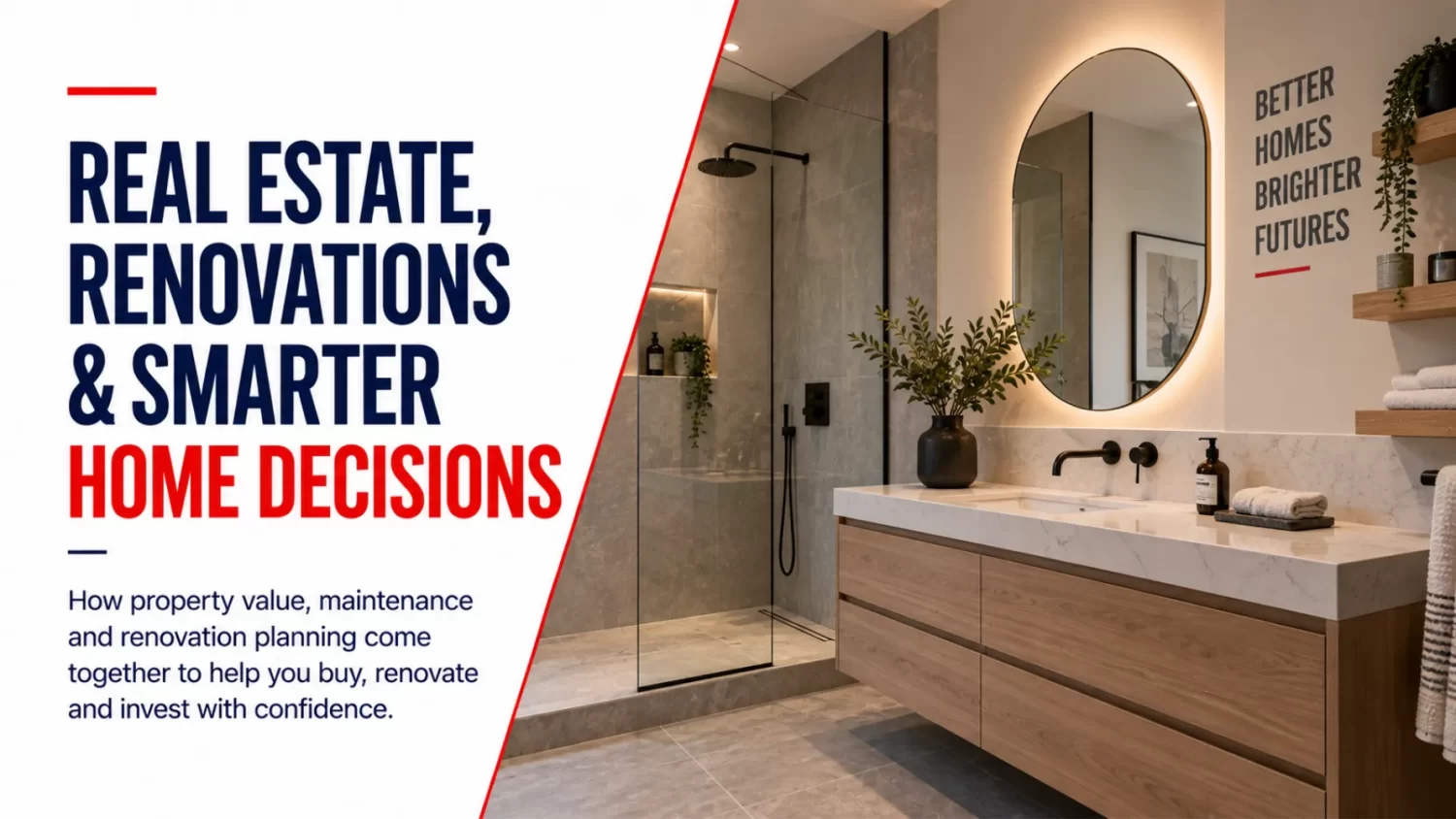
Before buying a home, planning a renovation, investing in real estate, or choosing which upgrades actually make sense, it helps to speak with someone who understands more than one side of the process. In this episode, Irene Joffee joins Acadia On Air to discuss real estate, entrepreneurship, home maintenance, renovation planning, bathroom renovations, AI design concepts, client education, work-life balance, and how construction knowledge can help buyers make smarter decisions. For homeowners planning renovations, this conversation is especially useful because it connects real estate value, renovation choices, maintenance, design, and practical budgeting into one bigger picture.
One of the strongest points in the episode is that real estate decisions are not only about location and price. Irene explains that her background includes real estate, healthcare, entrepreneurship, home maintenance, construction, and renovation work. That gives her a different lens when walking through a house with a client. When someone understands both real estate and renovation costs, they can help buyers see the real potential and the real risk inside a property.
Helpful Takeaways About Real Estate and Renovation Planning
- Look beyond the listing photos. A home may look simple from the outside, but renovation costs, maintenance needs, layout issues, and future upgrades can change the real value.
- Maintenance should not be ignored. Roof issues, HVAC, filters, foundation cracks, leaks, weather damage, and seasonal upkeep can become expensive if homeowners only react after problems appear.
- Renovation knowledge helps buyers. Being able to estimate a kitchen, bathroom, flooring, or full-home renovation during the buying process can help clients make clearer decisions.
- Bathrooms require serious coordination. Even a small bathroom can involve demolition, drywall, tile, plumbing, glass, vanity choices, fixtures, design decisions, and tight scheduling.
- AI can support design decisions. Quick concept visuals can help clients understand whether they actually like bold tile, darker finishes, or a certain bathroom direction before construction begins.
- Design should match the purpose. A renovation for resale should usually stay more neutral, while a personal forever-home renovation can reflect more individual taste.
- Relationships drive good service. Irene’s story shows how business grows when clients, trades, and partners trust you, not only when you chase the next transaction.
Another important insight is Irene’s early idea for a home maintenance subscription service. She explains that many homeowners do not know who to call for basic upkeep, seasonal checks, filters, roof concerns, HVAC issues, foundation cracks, leaks, and general repairs. The idea was simple but powerful: instead of waiting until something breaks, homeowners could pay for ongoing support that helps prevent bigger problems before they happen.
The episode also shows how that idea evolved. What started as a home maintenance subscription quickly turned into handyman work, then renovation requests, then a larger construction operation. Clients who needed small maintenance help also needed kitchens, bathrooms, flooring, roofing, and other renovation services. That shift showed how much demand exists when homeowners trust one point of contact to help them understand and manage work around the house.
Irene is also honest about the challenges of scaling that kind of business. Hiring trades without deep construction experience, managing quality, carrying payroll, fixing mistakes, and protecting the company’s reputation all became major pressure points. The conversation makes it clear that growth is not automatically success if the quality control, people, and systems cannot keep up with the demand.
One of the most useful parts of the episode is the connection between real estate and renovation estimating. Irene explains that she still works with renovation clients, especially when helping buyers understand what a home may need after purchase. If a kitchen looks dated, she can give a rough range on the spot. If a bathroom needs work, she can explain what kind of budget and scope the buyer may be looking at before they make a decision.
The conversation also gets into bathroom renovations in detail. Bathrooms may be small, but they are complicated. Tile, plumbing, drywall, demolition, glass, vanities, fixtures, waterproofing, scheduling, and client decisions all need to line up. Irene explains that with the right trades and systems, many bathroom projects can move quickly, but that only happens when the team is organized and the decisions are made early.
AI design tools become another practical topic. Irene explains that she can take a picture of a current bathroom, ask the client what they roughly want, and quickly generate a concept. That helps clients see whether they actually like their idea before they commit to materials. A homeowner may think they want black tile or a very bold look, but once they see it in their own space, they may realize a softer or more neutral direction works better.
The episode also makes a strong point about resale value. If a homeowner is renovating for themselves, personal taste matters. But if they may sell within the next few years, Irene explains that less personal opinion can often create better return. Neutral finishes, white and grey tones, wood accents, warm textures, clean lighting, and thoughtful details can help a space appeal to more buyers later.
Another important theme is how Irene keeps up with trends. Because she reviews new listings constantly and sees many homes in person, she notices which designs are selling faster, which finishes feel current, and which upgrades are helping properties stand out. That real estate exposure gives her a practical design instinct because she is not only looking at what looks nice; she is seeing what buyers actually respond to in the market.
The conversation also gets personal. Irene talks about being an entrepreneur, a real estate agent, a business owner, and a mother. She is open about the difficulty of balancing multiple companies, clients, children, self-doubt, boundaries, and ambition. The episode does not pretend that work-life balance is easy. Instead, it shows how family and business sometimes blend together, especially when someone is building a life around responsibility, service, and long-term goals.
For homeowners and buyers, the practical lesson is clear: real estate and renovation decisions should not be separated. A home’s value depends on location, condition, maintenance, future repairs, renovation potential, design choices, and how the property will be used. Whether someone is buying, selling, renovating, or investing, the best decisions come from understanding both the numbers and the work behind the walls.
This blog only scratches the surface of the full conversation. Watch the full podcast above to hear the full discussion on real estate, home maintenance, renovation planning, bathroom renovations, AI design tools, entrepreneurship, client service, construction experience, work-life balance, and how Irene built her career around helping people make better decisions.