

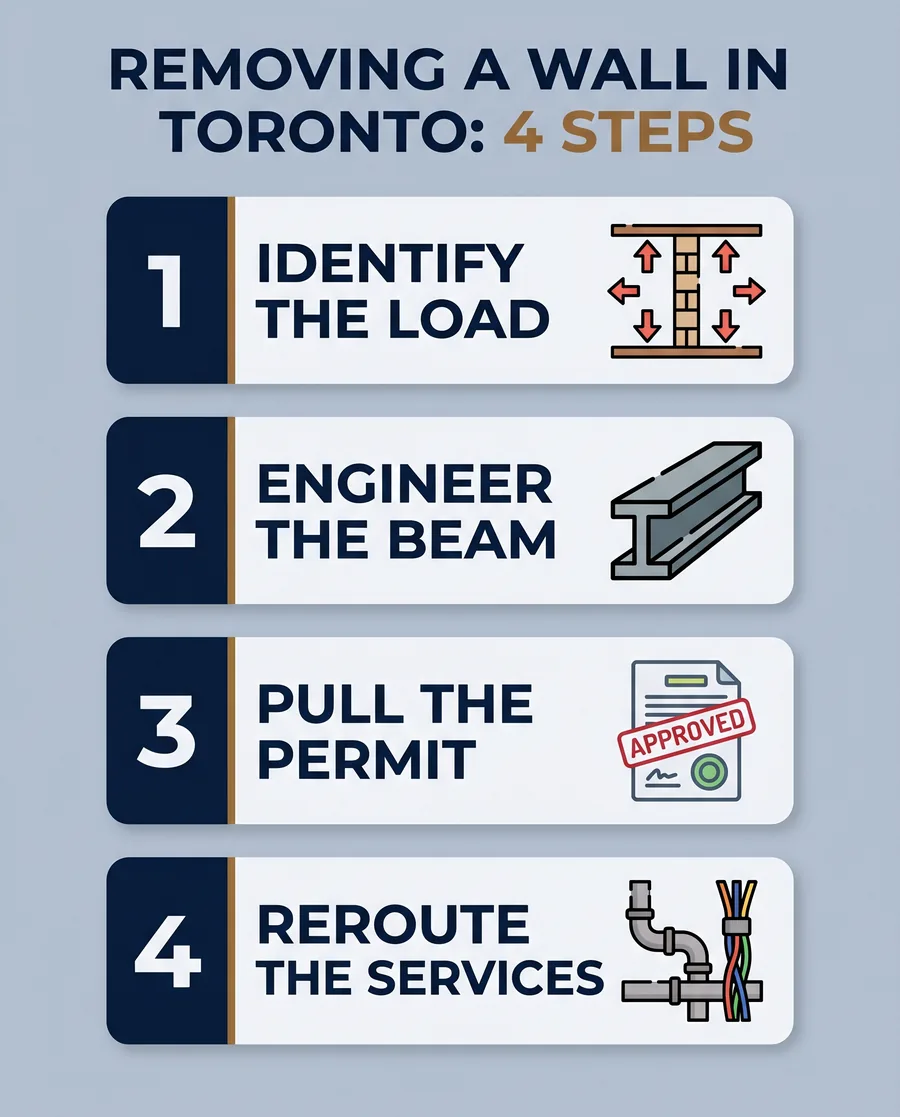
The short version on load bearing wall removal in Toronto: you can almost always open up a space, but you cannot do it safely without first finding out whether the wall carries weight, getting an engineer to size the beam that replaces it, and pulling a building permit. Skip any of those three and you are gambling with the structure of your house. If you would rather hand the whole process to one team, our full home renovation service manages the design, the engineering, and the City approvals from start to finish.
This guide walks through what a designer and engineer actually check before a single stud comes out, in the order we check them, so you know what the job really involves before you call anyone.
In this article
- Why removing a wall is not just demolition
- Step 1: figure out if the wall is load bearing
- Step 2: get an engineer to size the beam
- Step 3: pull a Toronto building permit
- Step 4: trace the services hiding in the wall
- What wall removal costs in Toronto in 2026
- Common mistakes that turn cheap into expensive
- Frequently asked questions
Why removing a wall is not just demolition
Knocking out a wall looks like the easiest part of a renovation. It is not. Some interior walls only divide rooms and carry nothing but their own weight, so taking them out is straightforward. Others carry the floor above, the roof, or both, funnelling that load down through the wall into the foundation. Remove one of those without a properly engineered beam in its place and the load has nowhere to go but down, which shows up as sagging floors, cracked drywall, and sticking doors within months.
Older Toronto homes make this trickier. A 1920s semi in Leslieville, a postwar bungalow in Scarborough, and a new build in North York are framed in completely different ways. That is why the first job is never the sledgehammer. It is figuring out exactly what the wall in front of you is doing.
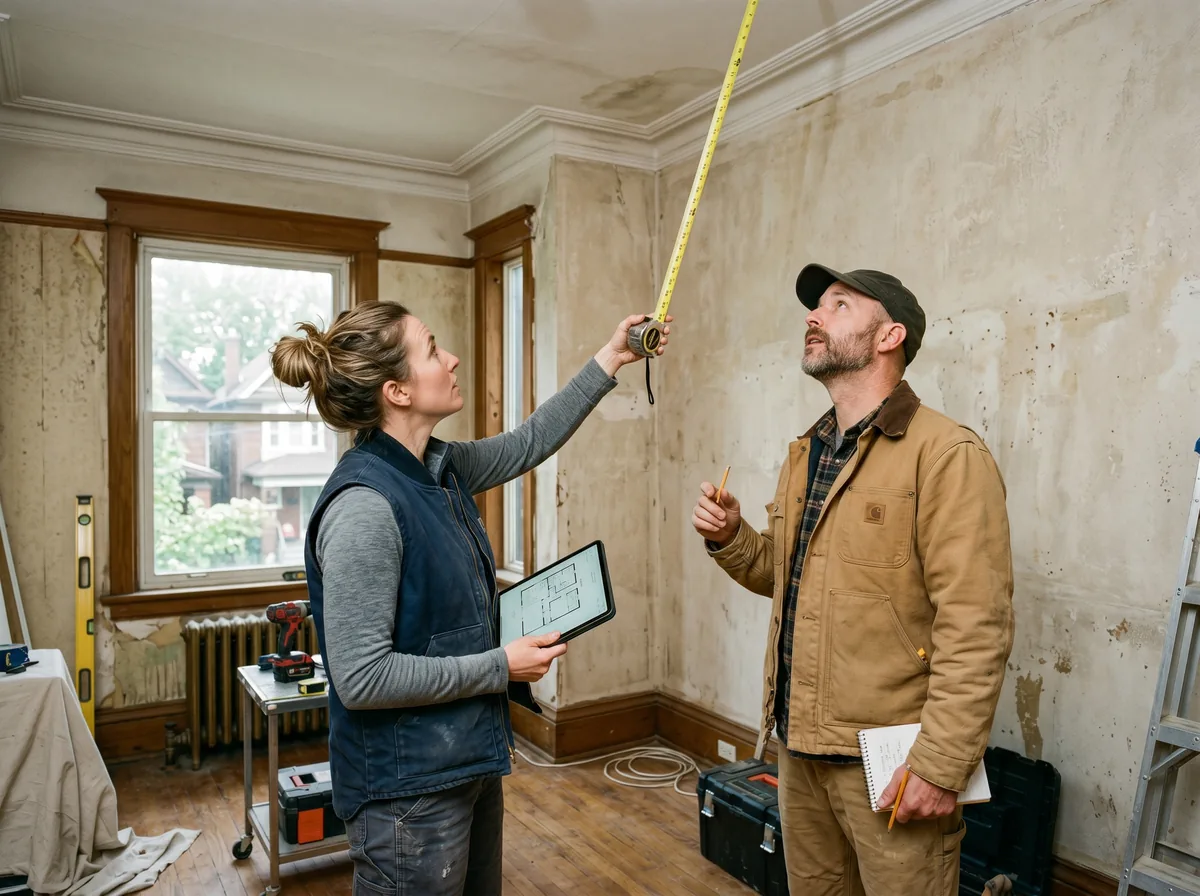
Step 1: figure out if the wall is load bearing
Permits and structural safety: Never assume a wall is safe to remove based on a video or a hunch. Misreading a load-bearing wall is one of the most dangerous mistakes a homeowner can make. Have the wall assessed in person by a qualified designer or a licensed professional engineer before you commit to opening it up.
There are clues you can read yourself. Walls that run perpendicular to the floor joists above are more likely to be carrying load, while walls running parallel to the joists often are not. Walls that stack directly above a beam or a foundation wall in the basement are prime suspects. So is any wall sitting roughly down the centre of the house, since that is where many homes carry their main load-bearing line.
Clues are not proof. The only reliable way to know is to expose the framing or pull the original drawings and have someone qualified confirm it. For a deeper read on how this works in local homes, see our guide on renovating houses in Toronto and the structural questions that come up most often.
Pro tip: check the basement first
The fastest free clue is right under your feet. Go to the basement and look for a beam, a row of posts, or a thick block wall running roughly below the wall you want to remove. If the load path continues down through the floors, you are almost certainly looking at a load-bearing wall, and you should budget for an engineered beam from the start.
Step 2: get an engineer to size the beam
Once a wall is confirmed as load bearing, removing it means transferring its load to a new beam and the posts that carry that beam down to the foundation. Sizing that beam is not a guess. A licensed professional engineer calculates the span, the load above, and the species and grade of the beam, whether that ends up being engineered LVL, steel, or dimensional lumber, then provides a stamped drawing.
That stamped drawing does two jobs. It tells the builder exactly what to install and how to support it during demolition, and it is what the City wants to see when you apply for your permit. Trying to remove a structural wall without it is where most dangerous shortcuts begin.
People often ask: can I remove a load-bearing wall myself?
Physically, the demolition is within reach of a confident DIYer. The problem is everything around it. You still need an engineer to size the replacement beam, a permit before the wall comes down, and temporary shoring to hold the structure while you work. Get the shoring or the beam wrong and you risk collapse or a failed inspection that has to be torn out and redone. For a structural change in Toronto, the safe and usually cheaper path is to have it designed and built properly the first time.
Step 3: pull a Toronto building permit
Removing or altering a load-bearing wall is structural work, and structural work needs a building permit in Toronto. The City reviews your engineer-stamped drawings to confirm the beam and supports meet the Ontario Building Code, then inspects the work at key stages. You can start the application through the City of Toronto building permit service.
Permits exist to protect you. They put a second set of trained eyes on the structure, and they create a paper trail that matters when you sell, since buyers and their lawyers increasingly ask whether past renovations were permitted. Unpermitted structural work can stall a sale or force expensive remediation later. The relevant standard, for the detail-minded, is the structural provision set in Ontario Regulation 332/12.
Step 4: trace the services hiding in the wall
Walls are rarely empty. Plumbing stacks, electrical runs, HVAC ducts, and the odd structural post all like to live inside them. Before demolition, a good team traces what is in the wall and plans where it goes instead. Rerouting a drain stack or a panel feed is routine, but it has to be designed in, not discovered mid-swing with a reciprocating saw.
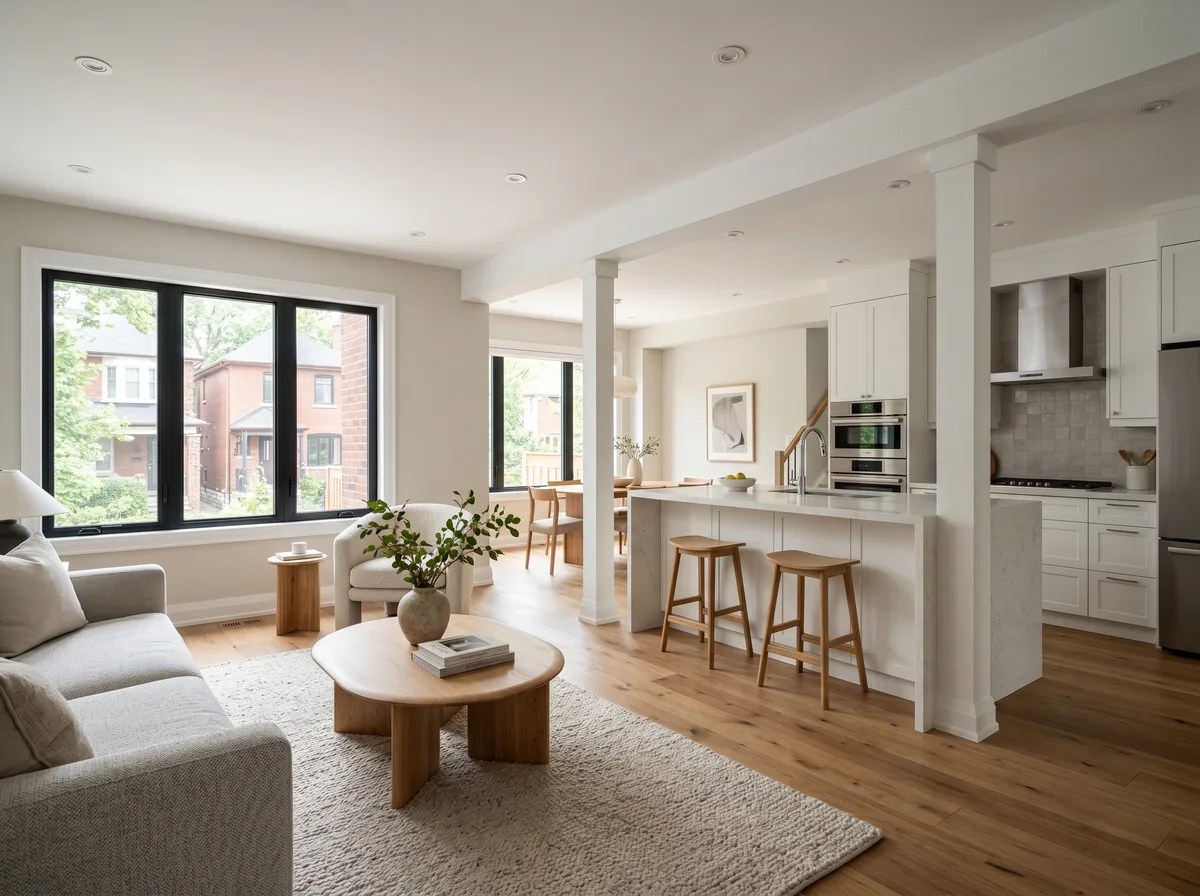
This is also where an open-concept plan can ripple outward. Combining a kitchen and dining room often means relocating outlets, switches, and lighting to suit the new layout. If a kitchen is part of your project, plan the wall removal and the kitchen renovation together so the electrical and plumbing only get moved once.
What wall removal costs in Toronto in 2026
Pricing note: The figures on this page reflect typical 2026 ranges in Toronto and the GTA. What you actually pay depends on the size and scope of the project, the condition of your home, finishes, site access, and permit and design fees. Always get a written quote and a design or feasibility review before committing to a renovation.
The single biggest cost driver is whether the wall is load bearing. A non-structural partition is cheap to remove. A structural wall pulls in an engineer, a permit, a beam, posts, temporary shoring, and patching of floors and ceilings. The ranges below are typical 2026 GTA starting points to sanity-check a quote, not firm numbers.
| Type of wall removal | Typical Toronto range (2026) | What is included |
|---|---|---|
| Non-load-bearing partition | $1,000 to $3,500 | Demo, debris, patch and paint |
| Load-bearing wall, LVL beam | $6,000 to $15,000 | Engineer, permit, beam, posts, shoring, finishing |
| Load-bearing wall, steel beam | $10,000 to $25,000+ | Heavier beam, larger spans, more support work |
| Engineer drawings only | $800 to $2,500 | Stamped structural drawing for the permit |
| Toronto building permit | $200 to $1,500+ | City application and inspection fees, scope dependent |
If a wall removal is one piece of a larger project, it usually makes sense to fold it into a broader interior renovation or a basement build so the permit, the trades, and the finishing all happen in one coordinated pass instead of three.
Common mistakes that turn cheap into expensive
Red flag: demolition has already started and no one sized a beam
If a wall is open, the ceiling is unsupported, and there is no stamped beam drawing on site, stop work. A load-bearing wall left open without proper temporary shoring is a genuine safety risk. Get an engineer in before anyone goes back to work, and do not let a contractor talk you past a missing permit.
- Assuming the wall is non-structural. The cheapest demolition becomes the most expensive repair when the floor above starts to sag.
- Skipping the permit to save time. Unpermitted structural work can block a future sale and force you to open finished walls for retroactive inspection.
- Forgetting the services. Discovering a plumbing stack mid-demolition adds days and dollars that planning would have avoided.
- Choosing the lowest bid blind. A quote with no engineer and no permit line is not cheaper, it is incomplete.
Sources and further reading
- City of Toronto, Apply for a Building Permit. toronto.ca
- Government of Ontario, Ontario Building Code. ontario.ca
- Ontario Regulation 332/12 under the Building Code Act. ontario.ca
- Acadia Design Consultants, in-house 2026 GTA project pricing observations.
- This Old House, “How to Identify and Remove a Load Bearing Wall” (video, embedded above).
Frequently asked questions
How do I know if a wall is load bearing in my Toronto home?
Start with the basics: walls that run perpendicular to the floor joists above, walls stacked over a basement beam or foundation wall, and walls near the centre of the house are the usual load-bearing suspects. Those are clues, not proof. The only reliable way to confirm it is to expose the framing or review the original drawings and have a qualified designer or licensed engineer assess it in person. Because the cost and safety of the whole project hinge on this answer, it is worth paying for a professional opinion before you plan any demolition.
Do I need a permit to remove a wall in Toronto?
If the wall is load bearing, yes. Removing or altering a structural wall is regulated work that requires a City of Toronto building permit, supported by engineer-stamped drawings showing the replacement beam and supports. Non-load-bearing partitions can often be removed without a permit, but you still need to be sure the wall truly carries no load. When in doubt, check with the City before you start. Unpermitted structural work can surface during a future home sale and become costly to resolve.
How much does it cost to remove a load-bearing wall in Toronto?
In 2026, removing a load-bearing wall in Toronto typically runs from about $6,000 to $15,000 with an engineered LVL beam, and from $10,000 to $25,000 or more when a steel beam and larger spans are involved. That covers the engineer, the permit, the beam and posts, temporary shoring, and patching the floors and ceilings. A simple non-structural partition is far cheaper. Your final number depends on the span, the load above, access, and how much finishing the opening requires, so always get a written quote.
How long does it take to remove a wall and open up a space?
The hands-on work is often quick, a few days for demolition, beam installation, and patching. The timeline that catches people off guard is the lead time before that: an engineer needs time to produce stamped drawings, and the City needs time to issue the permit, which can take a few weeks depending on the season and scope. Plan for the paperwork phase, not just the construction phase. Booking the design and permit early is the simplest way to keep the project on schedule.
What to do next
Opening up a main floor can transform how a house lives. Getting there safely is a sequence, not a single swing of a hammer.
- Confirm whether the wall is load bearing before you plan anything else.
- Get a stamped engineer drawing and a Toronto building permit for any structural removal.
- Trace the plumbing, wiring, and ducts in the wall and design where they go.
Download the free quick guide
A printable step-by-step checklist covering identification, engineering, permits, and the services hiding in your wall.
Thinking about opening up a wall in your Toronto home?
We design the new layout, coordinate the engineering, and handle the permit so the structure is sound and the approvals are in order. Explore our full home renovation service, read more about how we work, or contact our team to talk through your space.