
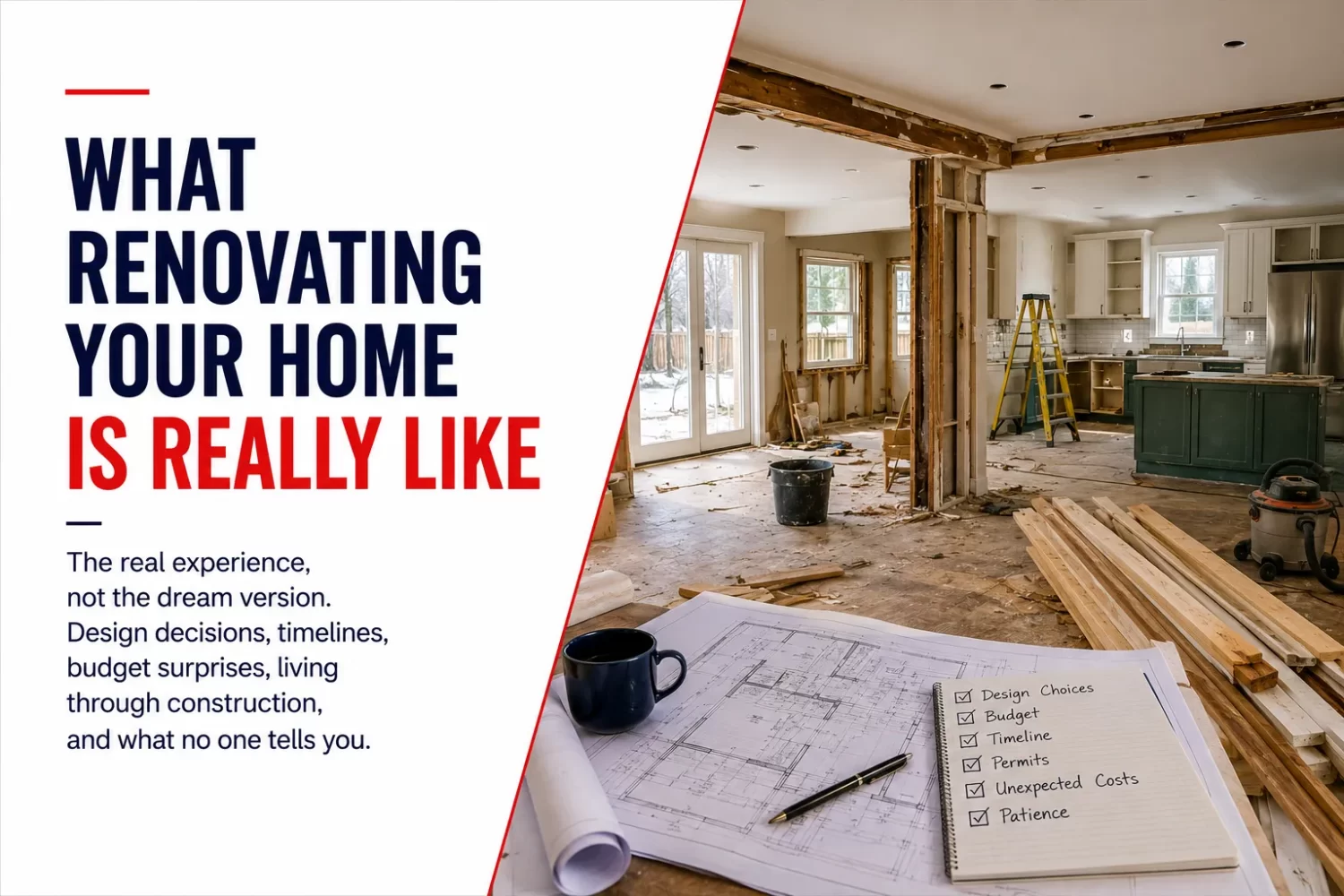
Before starting your first major renovation, it helps to understand the difference between the version people imagine and the version that actually happens inside a real home. In this episode, the team joins Acadia On Air to talk honestly about what it is really like to renovate your own house, including design disagreements, timeline surprises, living through construction, budget extras, contractor communication, emotional breaking points, and why the process is rarely as smooth as people expect. For homeowners planning interior renovations, this conversation is a useful reminder that a successful renovation depends on more than drawings, materials, and trades; it also depends on patience, communication, and realistic expectations.
One of the strongest points in the episode is that even a contractor can underestimate the emotional side of renovating their own home. Max explains that he expected the process to be quick, simple, and easy because he was already in the trade. In reality, the first major challenge was not structural work or construction logistics. It was agreeing on the design, finishes, kitchen, flooring, and overall direction with his wife. Renovation decisions are personal, and when more than one person lives in the home, the process can quickly become a negotiation between taste, function, budget, and long-term comfort.
Helpful Takeaways Before Renovating Your Home
- Expect design disagreements. Kitchens, flooring, finishes, layouts, colours, and details can create more discussion than homeowners expect.
- Do not assume the timeline will be quick. A renovation that feels like a three or four-month project can stretch when the scope grows or phases are added.
- Plan the work before moving in. Major work like the kitchen, first floor, flooring, and core living areas should be prioritized before the home becomes occupied.
- Living through construction is stressful. Once you move in, bathrooms, basements, mechanical changes, and unfinished areas become much harder emotionally and practically.
- Choose a contractor who communicates clearly. A good contractor should understand the full story, explain what is happening, and guide clients through frustrating stages.
- Prepare for budget extras. Small changes, added ducts, design adjustments, and unexpected requests can create costs that were not part of the original scope.
- Remember that invisible work is still progress. Electrical, HVAC, rough-ins, framing, and technical stages may not look exciting, but they are essential parts of the renovation.
Another important insight is how quickly a renovation can turn into phases. Max explains that there was a certain amount of work that had to be done before moving in, including the kitchen, first-floor renovation, flooring, and other major work. But after moving in, there were still bathrooms, basement areas, and additional improvements to complete. That second phase became much harder because the home was no longer just a job site; it was the place they were living every day.
The episode also highlights the snowball effect that often happens during renovations. Once walls, basements, mechanical areas, or old finishes are opened up, homeowners may realize they want to move HVAC equipment, rework the layout, add a sauna, improve a basement, or change something that was not part of the original plan. Some of those ideas may be worth doing, but every extra decision adds time, stress, and cost.
One of the most practical parts of the conversation is the discussion around contractor communication. Homeowners often get frustrated during early construction stages because progress looks slow. Rough-ins, ducts, electrical wiring, HVAC work, framing, and behind-the-wall preparation do not always feel like progress because the finished surfaces are not there yet. A strong contractor should warn clients about those stages ahead of time so they understand what is happening before frustration builds.
The episode also makes a useful point about the relationship between homeowner and contractor. When you renovate, you may already be debating choices with your spouse or family, but you also enter a second working relationship with the contractor. The contractor should understand the full goal of the project, not just the list of tasks. They should also be willing to give honest advice when something may clash, look wrong, or create problems later.
That honesty matters especially in design decisions. In the episode, Max explains that he may tell clients when he does not like a decision, but the final choice still belongs to the homeowner. The contractor’s role is not to block the client from getting what they want. The role is to use experience to explain what may not work, what may create visual conflict, and what may lead to regret after the money has already been spent.
Budget expectations are another major theme. Most homeowners understand in theory that extras may come up, but they can still feel surprised when a specific change is not included. Something like adding an extra duct, changing a detail, or asking for additional work may feel small to the homeowner, but it still requires labour, material, time, and coordination. Clear scope and communication are what prevent those moments from turning into conflict.
For homeowners, the practical lesson is simple: renovation is not just a construction process. It is a personal process. You are making expensive decisions, living through disruption, balancing opinions, trusting trades, and waiting through stages that may not look finished for weeks. The smoother you want the renovation to feel, the more important it is to plan clearly, communicate openly, budget realistically, and choose a contractor who can guide the process without pretending it will be effortless.
This blog only scratches the surface of the full conversation. Watch the full podcast above to hear the full discussion on the real renovation experience, design disagreements, timeline surprises, living through construction, budget extras, contractor communication, homeowner stress, and what people should understand before renovating their own home.