
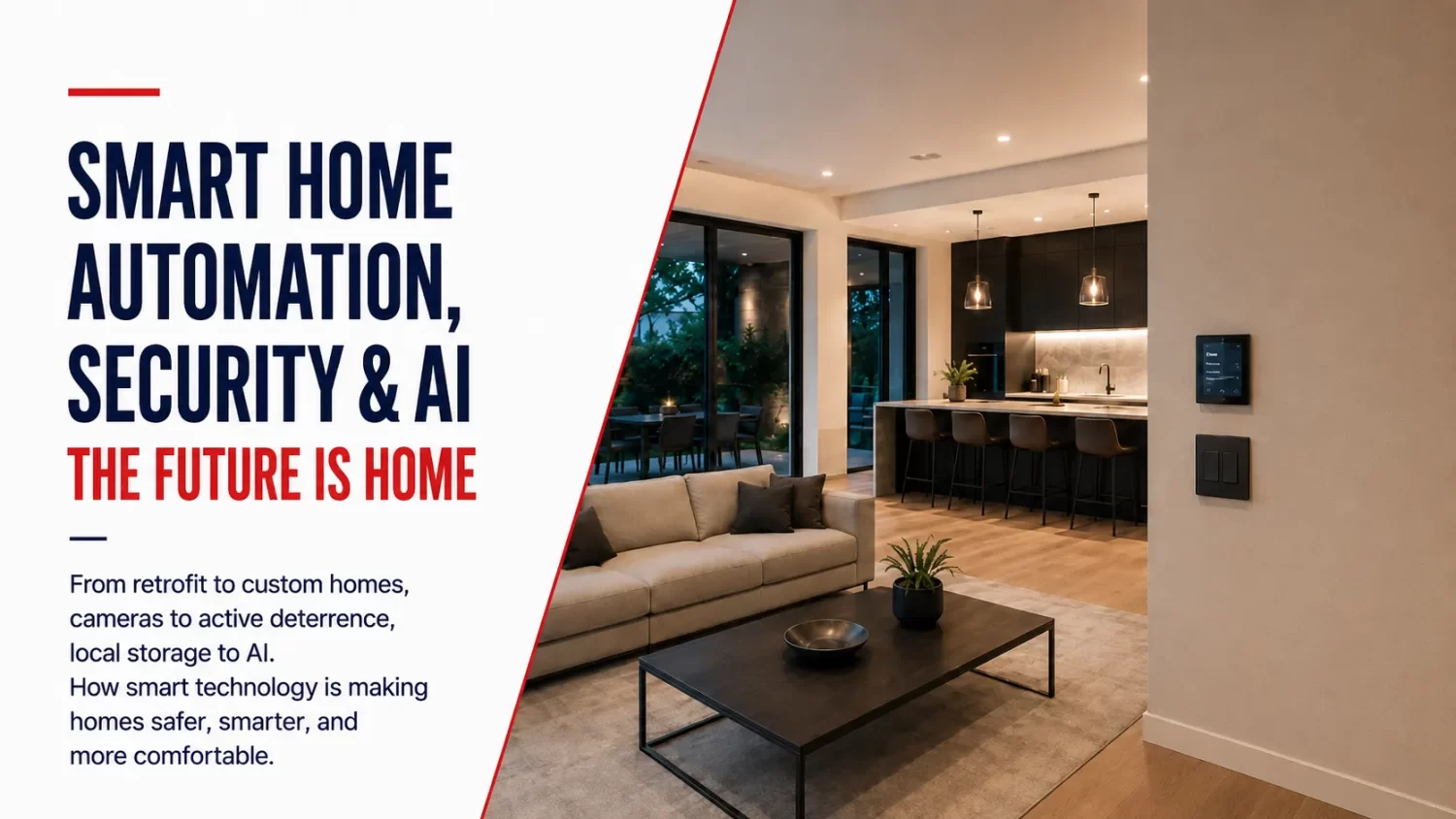
Before building a custom home, renovating an existing house, or adding smart technology to your property, it helps to understand what home automation actually means beyond the usual idea of lights, music, and remote controls. In this episode, Dennis Casa from Avus Automation joins Acadia On Air to discuss smart home technology, retrofit automation, custom home systems, security cameras, alarms, active deterrence, local video storage, privacy, AI, sensors, and the future of fully automated homes. For homeowners planning interior renovations, this conversation offers a practical look at how technology should be planned around real lifestyle, safety, convenience, and long-term usability.
One of the strongest points in the episode is that an existing home is not always worse than a new build when it comes to automation. Dennis explains that retrofit projects can actually be easier in one important way: the homeowner already knows how they live. They know which rooms they use, where they spend time, what bothers them, what they want, and what they do not need. Good automation starts with lifestyle, not gadgets, and that makes an existing home a useful starting point for thoughtful upgrades.
Helpful Takeaways About Smart Home Automation
- Start with the homeowner’s lifestyle. The best automation plan begins with how people actually use the home, not with a list of flashy features.
- Retrofit projects can be very practical. Existing homeowners already understand their space, which can make it easier to choose useful technology.
- Custom homes allow more flexibility. New builds make it easier to plan speakers, touchscreens, wiring, TVs, keypads, blinds, and system locations before walls are finished.
- Security is now a major priority. Many homeowners ask about alarms and cameras first, before moving into audio, video, lighting, and entertainment features.
- Think in layers of protection. Window film, cameras, alarms, lights, sirens, and active deterrence can work together instead of relying on one solution.
- Local storage can support privacy. NVR-based camera systems can record footage locally instead of depending entirely on cloud storage.
- AI may change automation dramatically. Future smart homes may rely on better triggers, sensors, patterns, and AI decisions instead of endless manual programming rules.
Another important insight is that automation should not overwhelm the client. Dennis explains that if a professional walks into the first meeting and unloads every technical possibility at once, the homeowner may get lost quickly. A better approach is to ask what the homeowner thinks of first when they hear “technology” or “automation,” then build the conversation from there. This keeps the planning grounded instead of turning the process into a confusing list of devices.
The episode also shows how priorities have shifted. In the past, many homeowners started with music around the house, TVs, and general audio-video systems. Today, security is often the first topic. Homeowners want to know how alarms, cameras, window protection, and deterrence systems can help protect their home and family before they move into comfort features like music, lighting, or entertainment.
One of the strongest security points in the conversation is that protection works best in layers. Window film can help slow down a break-in once someone reaches the glass, but Dennis explains that his preferred approach is to stop people earlier. Cameras with active deterrence, lights, and sirens can react when someone approaches the property, giving the person a reason to leave before they ever reach the door or window.
The discussion also gets into camera intelligence and false alarms. Modern systems can detect people, vehicles, or both, and some use AI-based detection to reduce unnecessary triggers from leaves, trees, pets, or general motion. The technology is not perfect, but it can be adjusted through sensitivity, pixel detection, and system settings so it works better for the actual property.
Privacy is another major part of the episode. Instead of relying only on cloud-based doorbell or camera subscriptions, some systems use an NVR with local storage. That means the footage is recorded on a local hard drive, with storage capacity depending on the number of cameras, camera quality, and drive size. For homeowners who care about privacy, this can be a major advantage because they can keep more control over where their video data lives.
The conversation then moves into the future of automation. A fully automated home sounds simple from the outside, but Dennis explains that the real challenge is triggers. A smart home needs to know what happened before it can respond properly. That could mean motion sensors, occupancy sensors, geofencing, keypads, voice commands, or future location-based systems. Once the trigger is reliable, the number of possible actions becomes almost endless.
AI is where the future becomes more interesting. Instead of programming every possible “if this, then that” rule manually, AI may eventually help smart homes understand patterns, predict needs, and make better decisions. The episode imagines a home that can turn on lights when someone arrives, play music, prepare a room, ask whether the sauna should be started, or adjust the environment based on habits and context. At the same time, the conversation recognizes the privacy and data concerns that come with that kind of convenience.
For homeowners, the practical lesson is that smart home automation should be useful before it is impressive. The right system should make the home safer, easier to use, more comfortable, and more aligned with daily life. Whether the project is a retrofit or part of a custom build, the best results come from planning technology early, choosing features that actually matter, and working with professionals who can explain the options without turning the home into a confusing tech experiment.
This blog only scratches the surface of the full conversation. Watch the full podcast above to hear the full discussion on retrofit automation, custom smart homes, cameras, alarms, active deterrence, local storage, privacy, AI, motion sensors, home technology, and where residential automation may be heading next.