
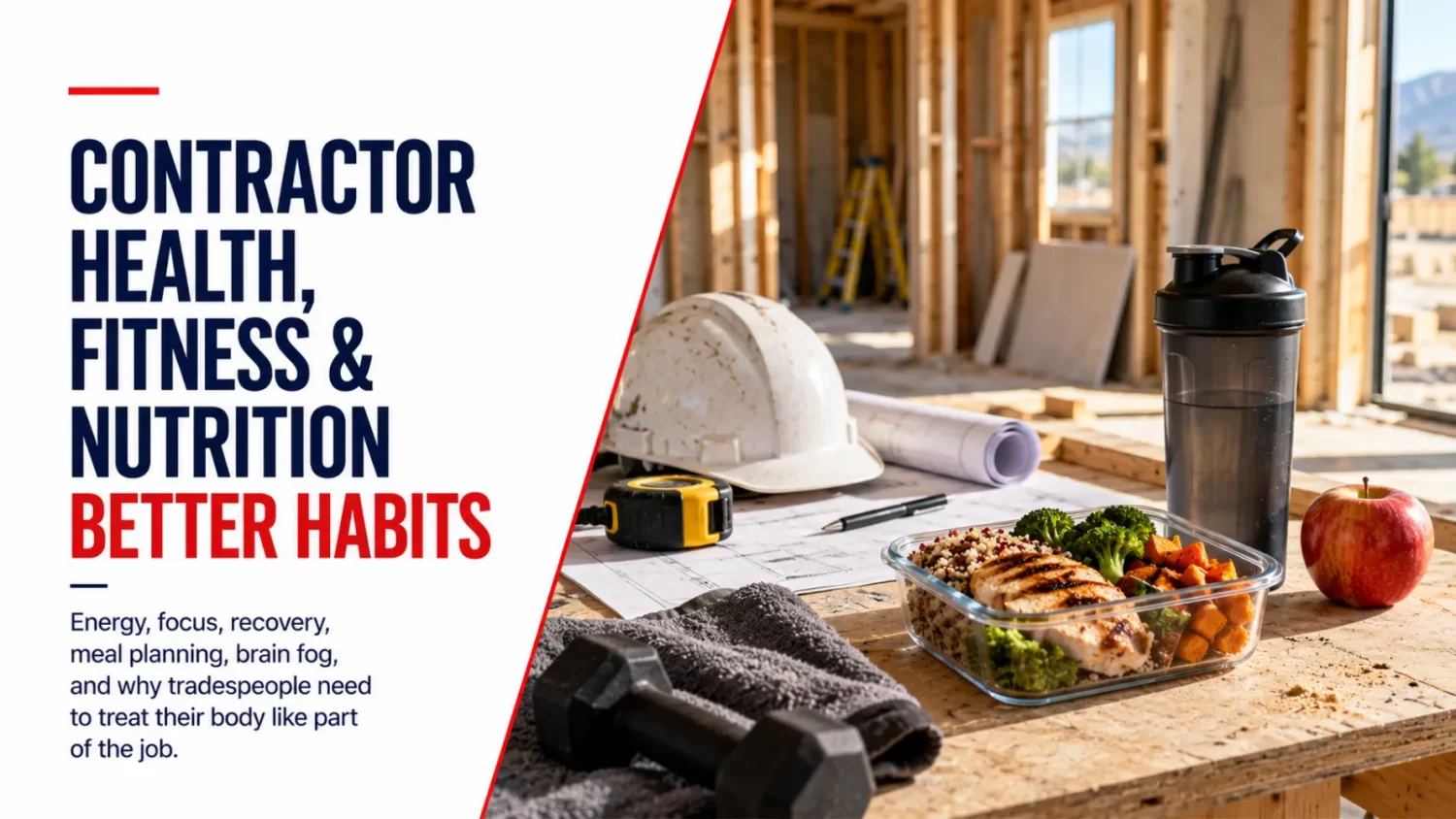
Before talking about tools, job sites, project schedules, or construction performance, it helps to talk about the person doing the work. In this episode, Alex Raposa joins Acadia On Air to discuss contractor health, fitness, nutrition, mindset, brain fog, job-site eating habits, physical labour, and why people in construction need to take better care of themselves. For homeowners planning interior renovations, this conversation also gives a deeper look at the people behind the work and why a healthier trade professional is often a more focused, consistent, and reliable professional.
One of the strongest points in the episode is that many contractors do not realize how much their daily habits are affecting them. Long drives, early mornings, physically demanding work, rushed lunches, coffee runs, fast food, and stress can become normal on job sites. Feeling tired, inflamed, foggy, or low-energy should not be accepted as just part of construction life. Alex explains that the first step is being honest with yourself about what habits are not supporting your body, mind, and overall well-being.
Helpful Takeaways for Healthier Contractors
- Be honest about your current habits. Look at what you eat, how you feel, how you sleep, and what choices are making your body and mind worse.
- Start replacing bad food slowly. A healthier lifestyle does not need to begin with an extreme diet; it can start by removing the worst habits and adding better whole foods.
- Build meals around real nutrition. Proper meals should include quality protein, clean carbs, and healthy fats instead of relying on quick job-site food every day.
- Do not ignore brain fog. Poor food choices can affect energy, mood, focus, and mental clarity, especially when the body is already under physical stress.
- Treat construction like athletic work. Contractors use their bodies every day, so recovery, food, hydration, and training should be taken seriously.
- Prepare food before the day controls you. Bringing proper meals or planning lunch ahead can prevent rushed decisions, skipped meals, or fast-food habits.
- Think of health as a lifestyle, not a short diet. The goal is not a temporary fix; it is creating repeatable habits that support your work, family, and future.
Another important insight is Alex’s personal connection to both construction and fitness. He explains that he grew up around construction, worked in landscaping, moved into windows and doors, and later spent years in carpentry and high-rise work. At the same time, fitness became a major part of his life, not only as a physical transformation, but as something that pushed him to think more deeply about health, discipline, confidence, and personal direction.
The episode also gets honest about how easy it is to fall into bad job-site eating habits. Alex describes being the person who picked up coffee and food for the crew and eating Tim Hortons regularly, including breakfast sandwiches and Timbits. The issue was not only weight gain. It was also how the food made him feel, including low energy, inflammation, and the “skinny fat” feeling that can happen when someone is not building or maintaining enough muscle.
That point matters for contractors because construction work is physically demanding, but physical labour alone is not the same as structured fitness. A person can work hard all day, carry materials, climb stairs, lift tools, and still be unhealthy if their food, recovery, sleep, and movement patterns are poor. The body is being used every day, but that does not automatically mean it is being trained, repaired, or supported properly.
The conversation also connects nutrition to mental clarity. Alex explains that brain fog is often connected to gut health and that cleaner eating can help people feel shifts in mood, focus, and energy. Instead of treating food as only calories or weight control, the episode frames nutrition as something that affects how a contractor thinks, handles stress, communicates, and gets through the day.
One practical message from the episode is that contractors should not overcomplicate the beginning. Not everyone needs to eat like a bodybuilder or follow a strict competition plan. A solid starting point is simple: proper breakfast, lunch, and dinner built around protein, carbs, and fats from better sources. The important thing is consistency, not perfection.
The episode also makes a strong comparison between tradespeople and athletes. Contractors put their bodies through serious physical work, often for long hours and many years. Athletes protect their performance with nutrition, coaching, preparation, hydration, and recovery. Contractors may not have the same support systems, but the standard should still be similar: if your body is your tool, you need to maintain it.
Alex’s story also shows that health is not only physical. His journey includes bodybuilding, fear, confidence, personal low points, spirituality, difficult life lessons, and eventually coaching others. That broader perspective is useful because many contractors do not only struggle with food. They struggle with stress, identity, discipline, burnout, and the feeling that they are too busy to take care of themselves.
For contractors, the practical lesson is simple: you cannot build a strong career while ignoring the body and mind that carry the work. Better food, better planning, better training, and better self-awareness can improve energy, focus, confidence, and long-term quality of life. Health does not need to become another overwhelming project. It just needs to become part of how you run your day.
This blog only scratches the surface of the full conversation. Watch the full podcast above to hear the full discussion on contractor health, fitness, nutrition, job-site eating habits, brain fog, whole foods, physical labour, bodybuilding, mindset, and why tradespeople should start treating their health with the same seriousness they bring to their work.