
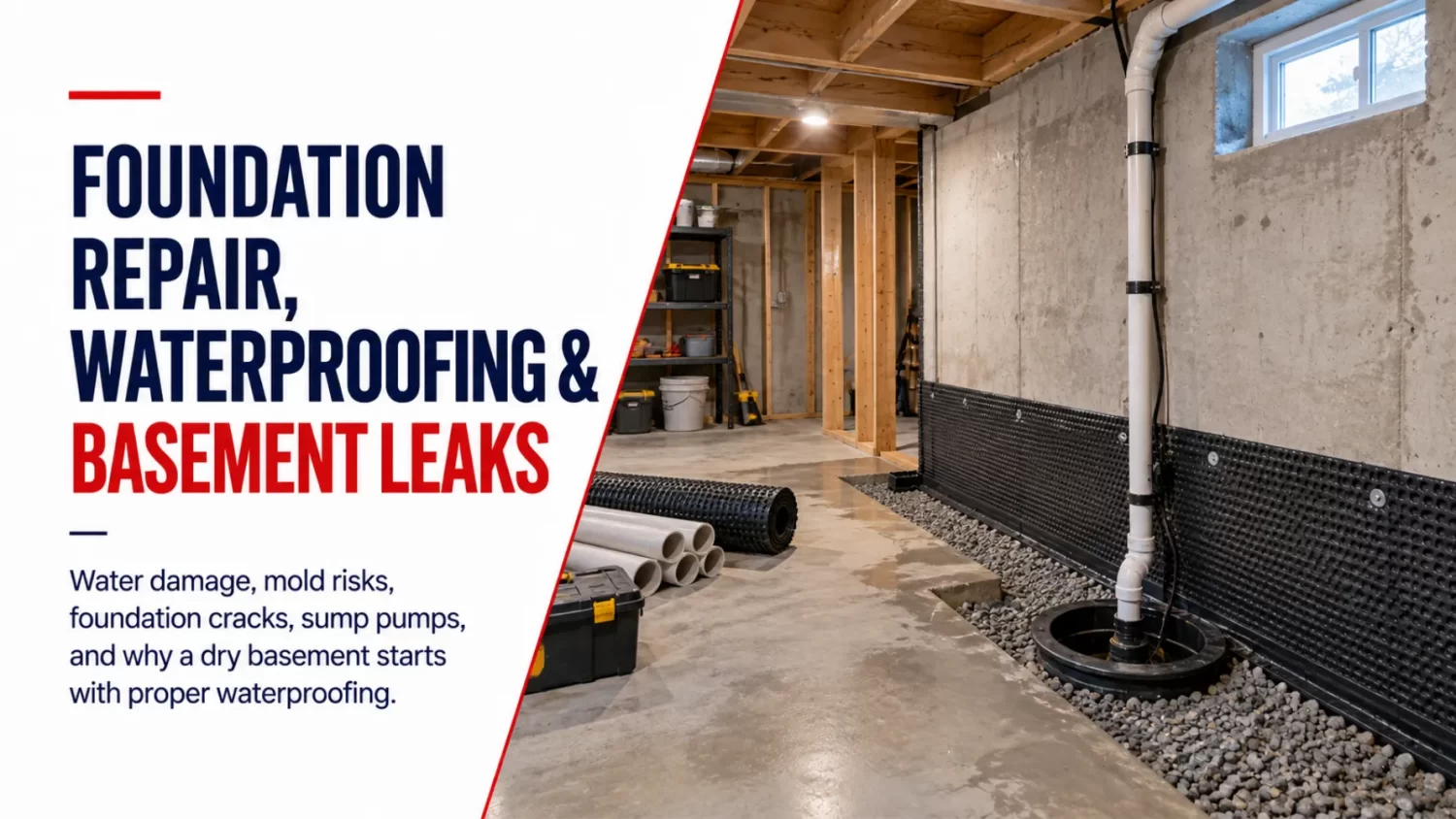
Before renovating a basement, buying an older Toronto home, or ignoring a small water leak, it helps to understand what foundation waterproofing actually protects. In this episode, Antonio from Aquastop joins Acadia On Air to discuss foundation repair, residential and commercial waterproofing, basement leaks, mold, mildew, sump pumps, weeping tile, exterior waterproofing, interior waterproofing, and why water problems should never be treated as just a cosmetic issue. For homeowners planning interior renovations, this conversation is a practical reminder that a finished basement is only valuable if the structure behind it is dry, safe, and properly protected.
One of the strongest points in the episode is that waterproofing is not just about stopping visible water. Antonio explains that his company focuses on residential and commercial foundation repair and waterproofing, along with concrete cutting, trenching, excavation, and related plumbing coordination. When water enters a basement, the issue can quickly become much bigger than a wet floor. Mold, mildew smell, damaged finishes, unhealthy air, and hidden foundation problems can all develop when water is repeatedly cleaned up instead of properly addressed.
Helpful Takeaways About Basement Waterproofing
- Watch for early warning signs. Mildew smell, water staining, pooling around the house, poor grading, short downspouts, open foundation gaps, and visible cracks can all point to waterproofing problems.
- Do not rely on a shop vac as a long-term solution. Cleaning up water after every leak does not solve the source of the problem or protect the home from mold.
- Waterproof before finishing a basement. If the basement is being renovated, waterproofing should be considered before new walls, flooring, insulation, or finishes are installed.
- Understand interior waterproofing. Interior systems manage water by directing it behind a membrane into an interior weeping tile and sump pump system.
- Understand exterior waterproofing. Exterior work is often the preferred way to stop water before it enters, but it can involve excavation, landscaping disruption, and foundation repair.
- Fix foundation problems first. Waterproofing should not simply cover damaged areas; cracks, gaps, parging issues, and weak sections should be addressed before the system is installed.
- Take mold seriously. Basement moisture can affect health, especially when tenants, children, or families are living in a damp lower-level space.
Another important insight is how easily homeowners underestimate basement water problems. The discussion explains that some people live with water coming in for years, choosing to vacuum or mop it up instead of repairing the source. That may feel cheaper in the moment, but it can allow mold, mildew, damaged framing, damaged baseboards, and poor indoor air conditions to continue developing behind finished surfaces.
The episode also highlights how waterproofing connects to home health. A damp basement is not only an inconvenience; it can create an unhealthy environment for the people living in the home. The conversation gets especially serious when discussing basement rental units where moisture, mold, and poor conditions may be hidden or ignored. The point is clear: if people are living downstairs, waterproofing and air quality are not optional details.
For older Toronto homes, the conversation explains that many foundations were built with little or no modern waterproofing. Some may not have proper weeping tile systems, while others may have only minimal damp proofing. Even newer homes can have issues if waterproofing was applied carelessly, installed below finished grade, or not detailed properly around the foundation. Age matters, but workmanship matters just as much.
The episode also compares interior and exterior waterproofing. Exterior waterproofing is often the preferred approach because it aims to stop water before it gets inside. That usually means excavation around the home, exposing the foundation, repairing problem areas, applying waterproofing layers, protecting the wall, managing drainage, and connecting water to the proper discharge system. It can be invasive, but it deals with the problem from the outside.
Interior waterproofing is different. Antonio explains that it is more of a water management system than a foundation repair system. Water may still enter, but it is directed behind a membrane into an interior weeping tile, carried to a sump pump, and discharged away from the house. This can be especially useful for tight Toronto properties where houses are too close together to excavate from the exterior.
The conversation also gets into the actual waterproofing process. Foundation repair comes first. Loose material, gaps, cracks, and weak areas need to be handled before applying waterproofing products. The system may include bituminous coating, reinforcement mesh, dimple board, airspace, weeping tile, and drainage paths that reduce hydrostatic pressure and allow water to move where it is supposed to go.
Another useful point is that waterproofing often works alongside plumbing. Interior waterproofing may include sump pump work, weeping tile, backflow valve coordination, sewage ejectors, or plumber involvement depending on the scope. On additions, laneway homes, underpinning, and new construction, the waterproofing contractor and plumber often need to coordinate below-grade systems carefully.
The episode also explains why the cheapest quote can become expensive later. Poor waterproofing, skipped disposal, lazy backfilling, bad prep, unfinished repairs, and careless workmanship can leave homeowners with the same problem after spending money. When the work is underground or behind finished walls, shortcuts may not be obvious right away, but they can become serious after the next rain, freeze-thaw cycle, or basement renovation.
For homeowners, the practical lesson is simple: water around the foundation deserves respect. A basement leak is not just a maintenance annoyance. It can affect structure, finishes, air quality, resale value, and the comfort of everyone living in the home. Before finishing a basement or buying an older property, homeowners should look closely at drainage, foundation condition, waterproofing history, and whether the home has a system that can actually manage water properly.
This blog only scratches the surface of the full conversation. Watch the full podcast above to hear the full discussion on foundation repair, basement waterproofing, interior systems, exterior waterproofing, sump pumps, weeping tile, mold, mildew, old Toronto homes, contractor shortcuts, and why water damage should be fixed before it becomes a bigger problem.