
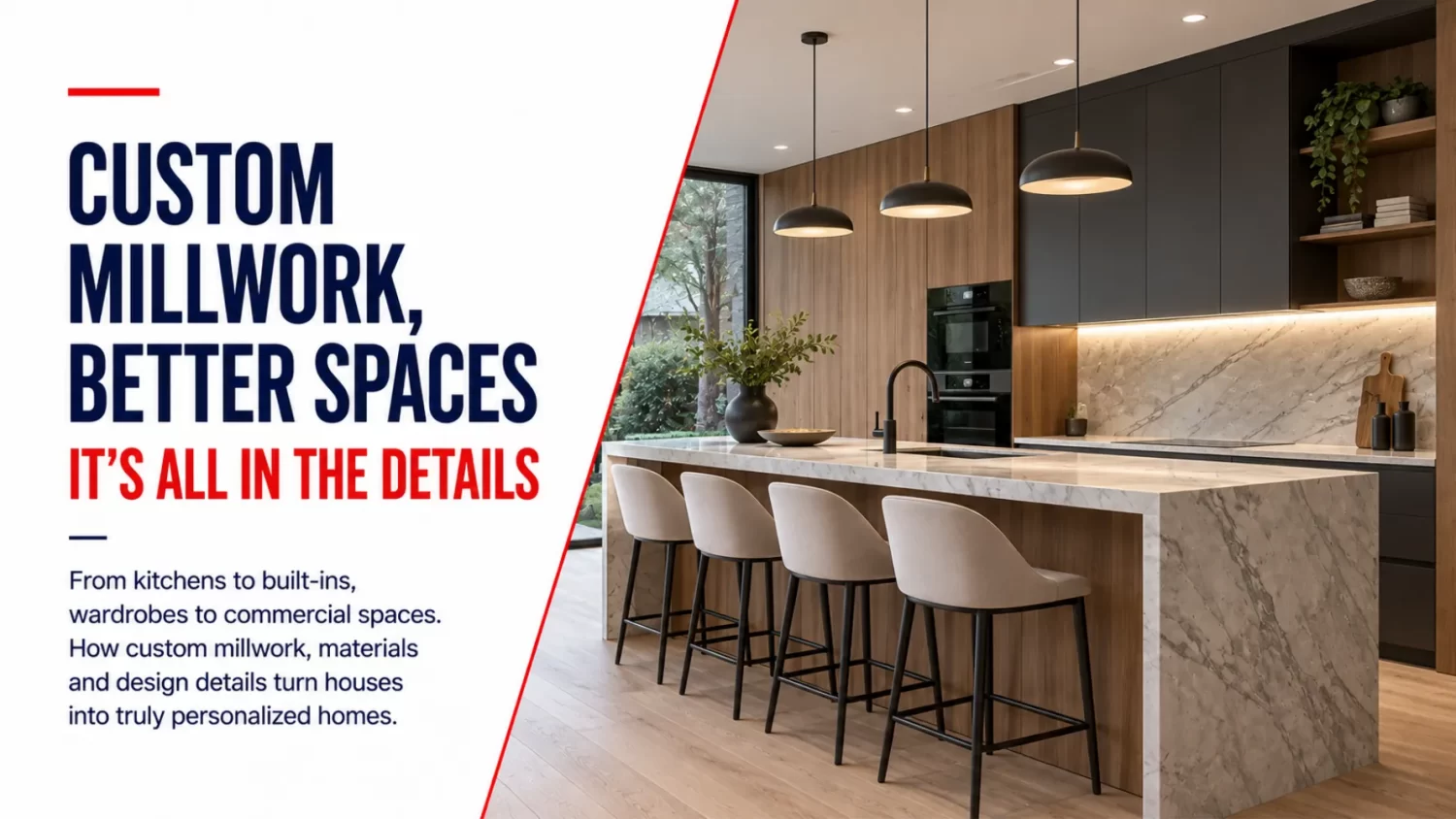
Before planning a custom kitchen, built-in unit, wardrobe, commercial space, or high-end renovation, it helps to understand what separates basic cabinetry from true custom millwork. In this episode, Kevin and Steve from Deakin International Inc. join Acadia On Air to discuss commercial millwork, high-end residential cabinetry, shop drawings, material selection, kitchen trends, custom doors, hardware details, and why the smallest design decisions can completely change the finished result. For homeowners planning interior renovations, this conversation is a useful reminder that millwork is not just a finishing detail; it is one of the most visible and personal parts of the entire project.
One of the strongest points in the episode is that millwork is not simply about building boxes. Kevin and Steve explain that anyone can assemble basic cabinets, but the real difference shows up in the details: wall panels, scribing, profiles, finishes, hardware, proportions, and how the full piece fits into the space. Great millwork depends on planning, precision, and the ability to turn design ideas into something that actually works in real life.
Helpful Takeaways About Custom Millwork
- Do not treat millwork as simple cabinetry. Custom kitchens, wardrobes, wall panels, display units, and commercial millwork require design thinking, technical drawings, and careful execution.
- Use shop drawings for every project. Even one cabinet can become a problem if dimensions, finishes, hardware, appliances, and installation details are not confirmed clearly.
- Choose materials based on the application. Solid wood, MDF, HDF, melamine, laminate, veneer, quartz, and quartzite all have different strengths, limitations, and best-use cases.
- Understand that water damages millwork. Higher-end materials and edge banding can help, but homeowners should not assume cabinetry is waterproof.
- Trust technical guidance. A good millwork shop should explain when a requested material, finish, profile, or detail may fail or create problems later.
- Plan appliances and openings carefully. Cabinetry must match real appliance specs, not only standard dimensions, especially in custom kitchens.
- Expect trends to evolve. Two-tone kitchens, slim shaker doors, curved details, white oak, solid wood features, and quartzite counters are becoming major design directions.
Another important insight is how much shop drawings protect the project. The episode explains that Deakin uses shop drawings no matter how large or small the job is. These drawings show how the piece will be built, what materials will be used, how the details come together, and what the client is approving before production begins. Without that step, a cabinet, kitchen, or commercial feature can easily turn into a misunderstanding between the designer, builder, homeowner, and millwork shop.
The conversation also highlights why permit drawings are not enough for real construction. A permit set may be enough to submit to the city, but it usually does not include the detailed information needed to build millwork, lighting, cabinetry, appliances, profiles, or finish details properly. For a custom home or renovation, the project needs another layer of technical documentation before the work is ready to fabricate.
Material selection is another major part of the episode. Homeowners often come in with assumptions about what is “better,” but the correct material depends on the job. For painted profile doors, the discussion points toward MDF or HDF because of the smoother finish and better stability. For solid wood, the episode explains that it makes more sense when the natural grain is part of the design, not when someone wants to pay for solid wood and then cover it with white paint.
The episode also makes a clear point about water resistance. Homeowners sometimes expect kitchen materials to be waterproof, but the reality is that millwork is still built from wood-based products. Better edge banding, higher-end finishes, and smarter construction can improve durability, but if water sits on a door or cabinet for too long, damage can still happen. A good millwork company should be honest about that instead of using “waterproof” language as a sales tactic.
Trends are also discussed in detail. Instead of plain white kitchens and standard shaker doors, the team talks about more two-tone kitchens, slim shaker profiles, oak finishes, curved island gables, curved cabinet details, solid wood features, and quartzite counters. The larger point is not to chase every trend blindly, but to understand how modern millwork is becoming more detailed, warmer, and more customized.
Another practical point is that millwork often becomes the moment when homeowners finally feel the renovation is real. Behind-the-wall work like insulation, framing, wiring, plumbing, and preparation may be important, but clients often do not emotionally connect with the project until the kitchen, built-ins, display units, or wardrobes are installed. Millwork is the part they see, touch, use, and live with every day.
The episode also explains why the right millwork shop should push back when needed. If a designer creates something beautiful but technically difficult or impossible, the millwork team has to identify the issue before production. A strong shop can explain which material will not work, which hardware will cause problems, which opening needs adjustment, or which detail needs to change so the final product still looks clean and functions properly.
For homeowners, the practical lesson is simple: do not rush the millwork process. A custom kitchen or built-in is not just a product you order; it is a design, fabrication, and installation process that depends on accurate measurements, approved drawings, proper materials, technical experience, and clear communication. When done properly, millwork can become the signature feature of the home. When rushed or poorly planned, it becomes one of the most expensive places to make a mistake.
This blog only scratches the surface of the full conversation. Watch the full podcast above to hear the full discussion on custom millwork, kitchen cabinetry, shop drawings, commercial projects, high-end residential work, material choices, kitchen trends, curved details, appliance planning, and why premium millwork is all about the details.